 |
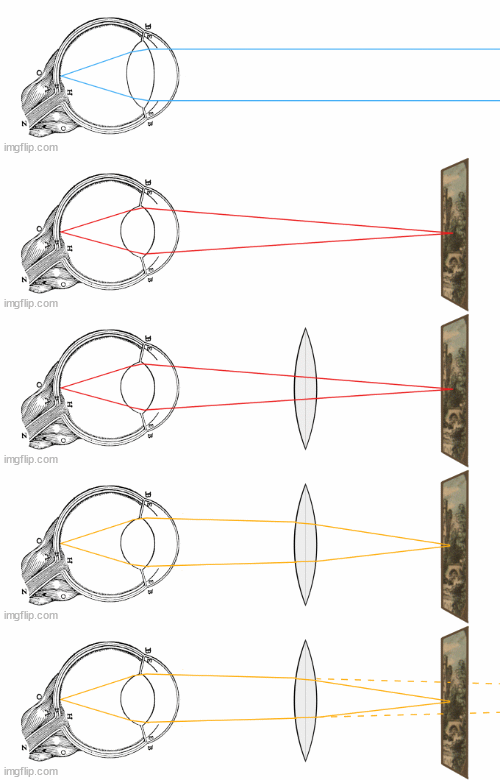
Figure P-3 – Monocular Convergence and the Spatial Deception of the Optical Machine
This animation demonstrates what happens to the eye when viewing a print with and without a biconvex lens. Watch what happens to the lens of the eye as it refocuses each time that the lens of the device is put in place. The organic lens changes shape and at some pre-conscious level the brain notes that change and interprets it as an index that the object focused on is at a different distance. Without the lens, a spot viewed on the image (let's say a depicted cloud) seems close; with the lens, it seems further off. The lens makes the cloud seem far away and the space of the picture open out behind the piece of paper on which it is depicted.
Eighteenth-century writers did no really understand focus and how it works. Elsewhere I discuss what they did understand and why, which I find a fascinating part of the story about how perception and understanding work. What I am offering in this animation is actually a reconstruction of what they might have said if they had understood the physiology of the eye better.