Rod Bantjes, “Genus_Zograscope_Pillar.html,” created 1 August, 2026; last modified, 1 August, 2026 (https://people.stfx.ca/rbantjes/).
Pillar Zograscope Genus (1740 - 1871)
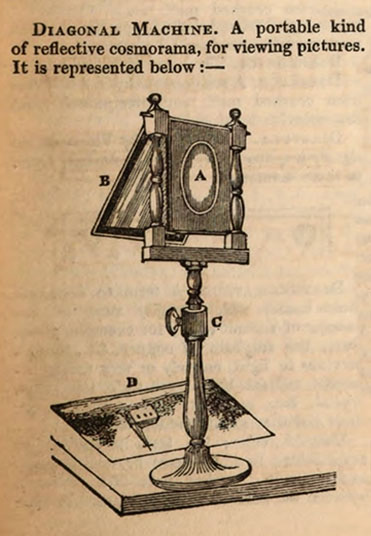 |
Figure PZG.1 –Zograscope, 1847 |
| Source: Francis, George William. The Dictionary of the Arts, Sciences, and Manufactures. London: W. Brittain, 1846. |
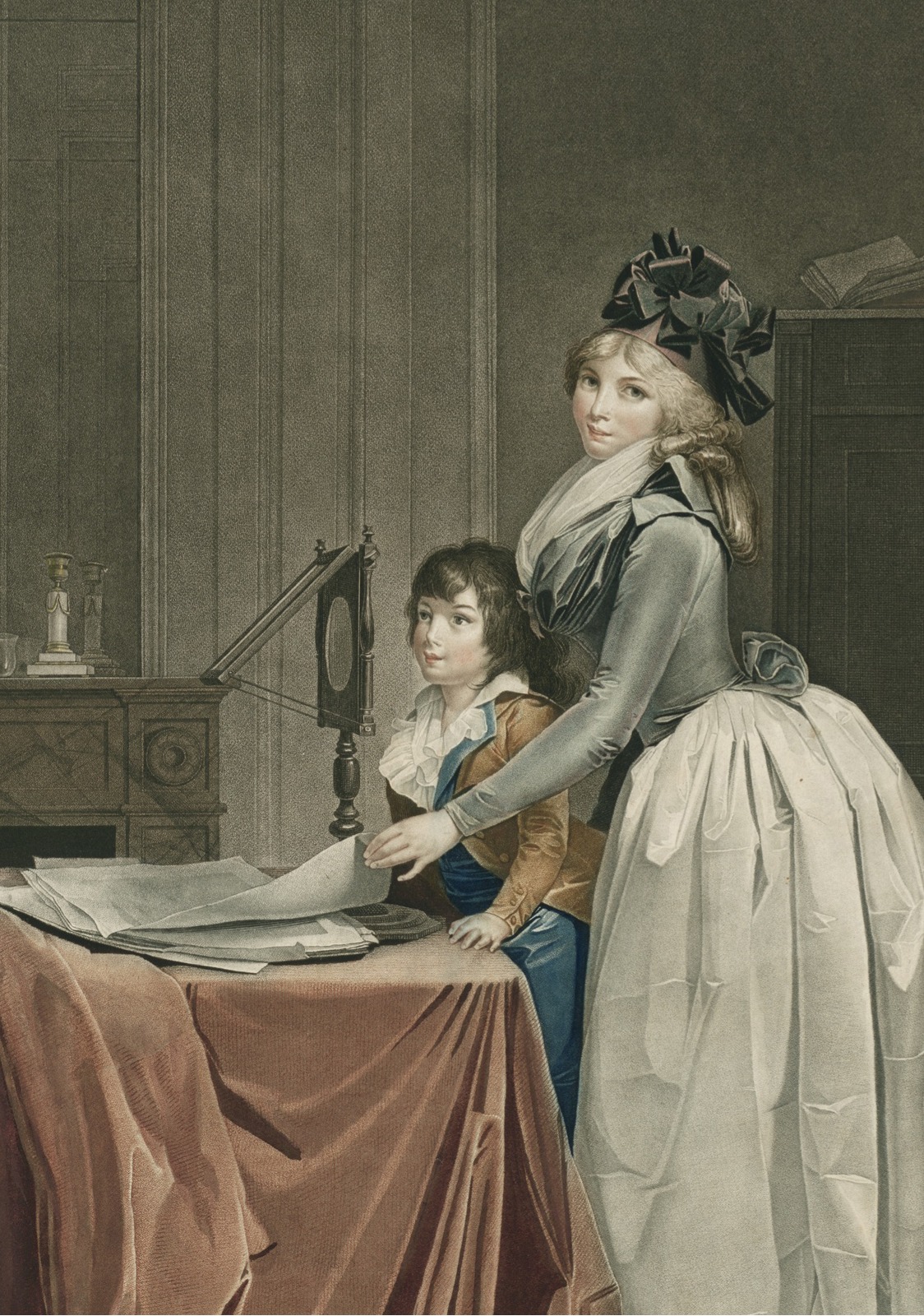 |
Figure PZG.2 – Pillar Zograscope in Use |
| Detail of J.F. Cazenave after Louis-Léopold Boilly, Portrait de Louise-Sébastienne Gély avec un enfant devant un optique, estampe, 1794, Amsterdam, Rijksmuseum |
The turned pillar zograscope is perhaps the most common or all the optical machines. It is a member of the Zograscope Family in the Optical Machine Taxonomy. Zograscopes are biconvex lens viewer for enhancing the 3D-effect of copper-plate engravings known as vues d'optique.
The turned pillar zograscope is a single-lens viewer supported by a wooden column and base made by turning on a lathe.
Figure PZG.1 illustrates the wide range of names used for this device. “Diagonal machine” is vague and could refer to any diagonal mirror box. “Cosmorama” is simply a misnomer for this device.
Each row in the following table represents a different species:
| Turned Pillar - Single: | 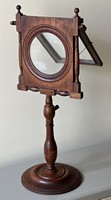 |
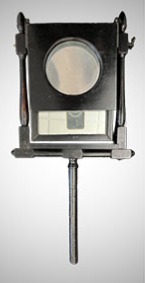 |
| RB-01 | EXBD-69024 |
This species has the standard design and styling. They are mostly of hardwood construction including the thumbscrew for securing the vertical pillar. The base and column are hand-turned. The lens frame is composed of turned elements terminating in square blocks at joints, crowned by two finials.
There are many minor variations in turned profiles and the particulars of hardware. They were undoubtedly produced to a standard but by many different manufacturers over a long span of time.
| Flat-Folding Zograscope: | 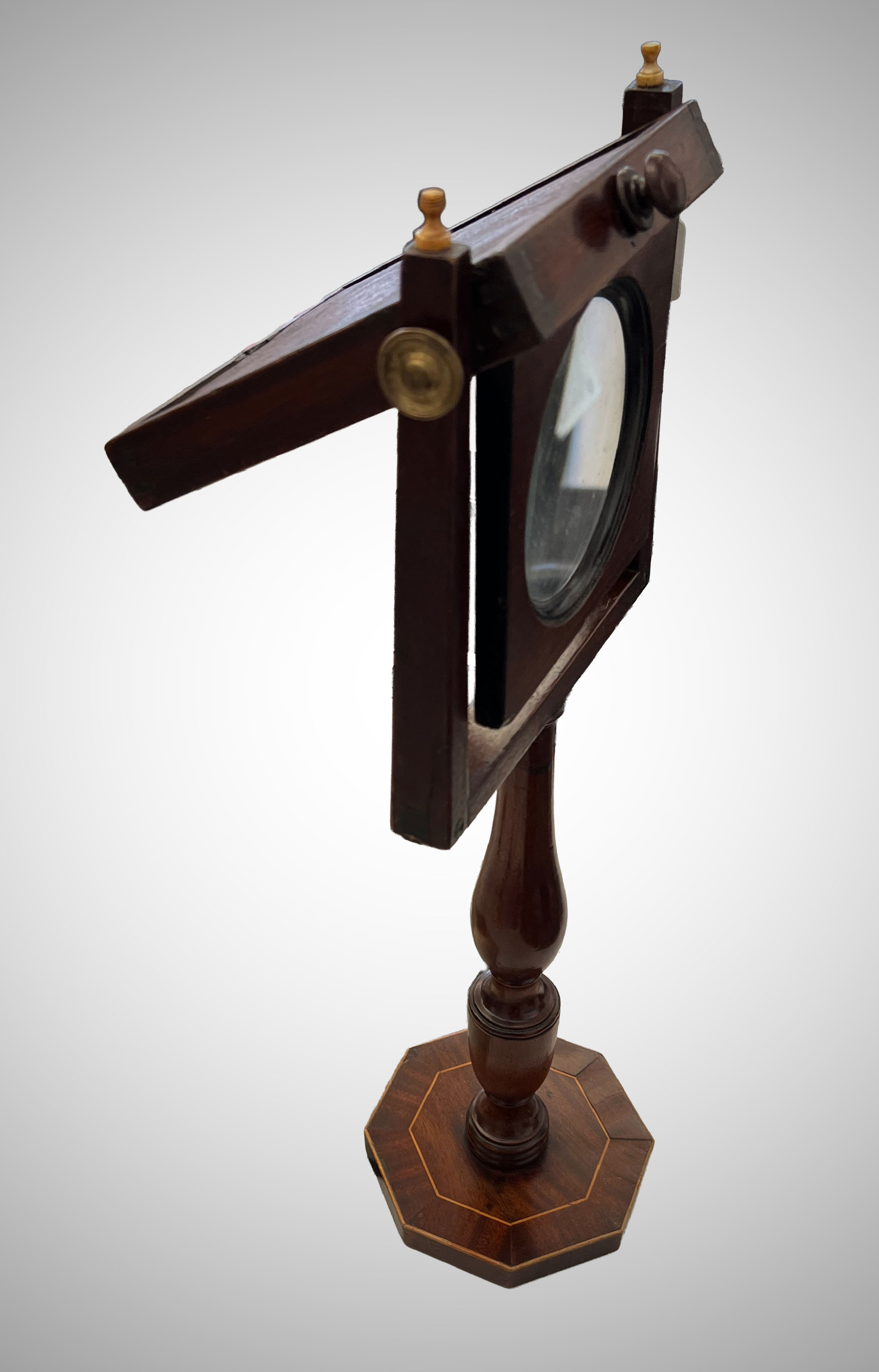 |
| EXEBD-69025 |
The lens and mirror-frames are cleverly designed to fold into one another for a flatter profile.
| Dutch Face: | 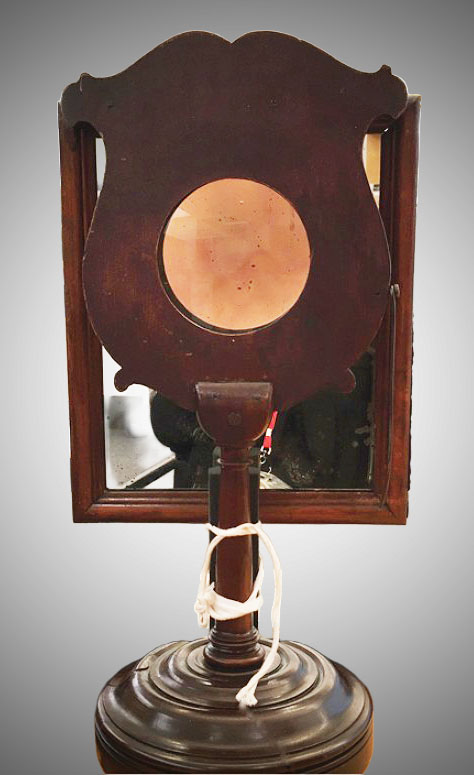 |
| WN-GTTY_29-93-R-118 |
Uniquely Dutch styling: the lens-mount is a solid piece of wood cut to a shape reminiscent of the rarekiek. It is in the Werner Nekes Collection of the Getty Research Institute, Los Angeles.
| Wide-Angle Zograscope: | 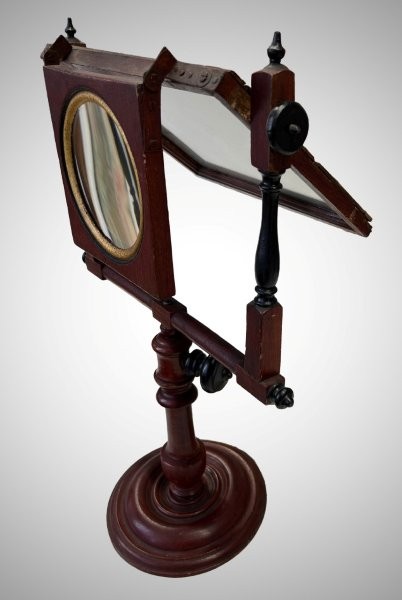 |
| WN-224 |