Rod Bantjes, “Image_Paper_Dioramas.html,” created 23 February, 2026; last modified, 27 February, 2026 (https://people.stfx.ca/rbantjes/).
Paper Dioramas
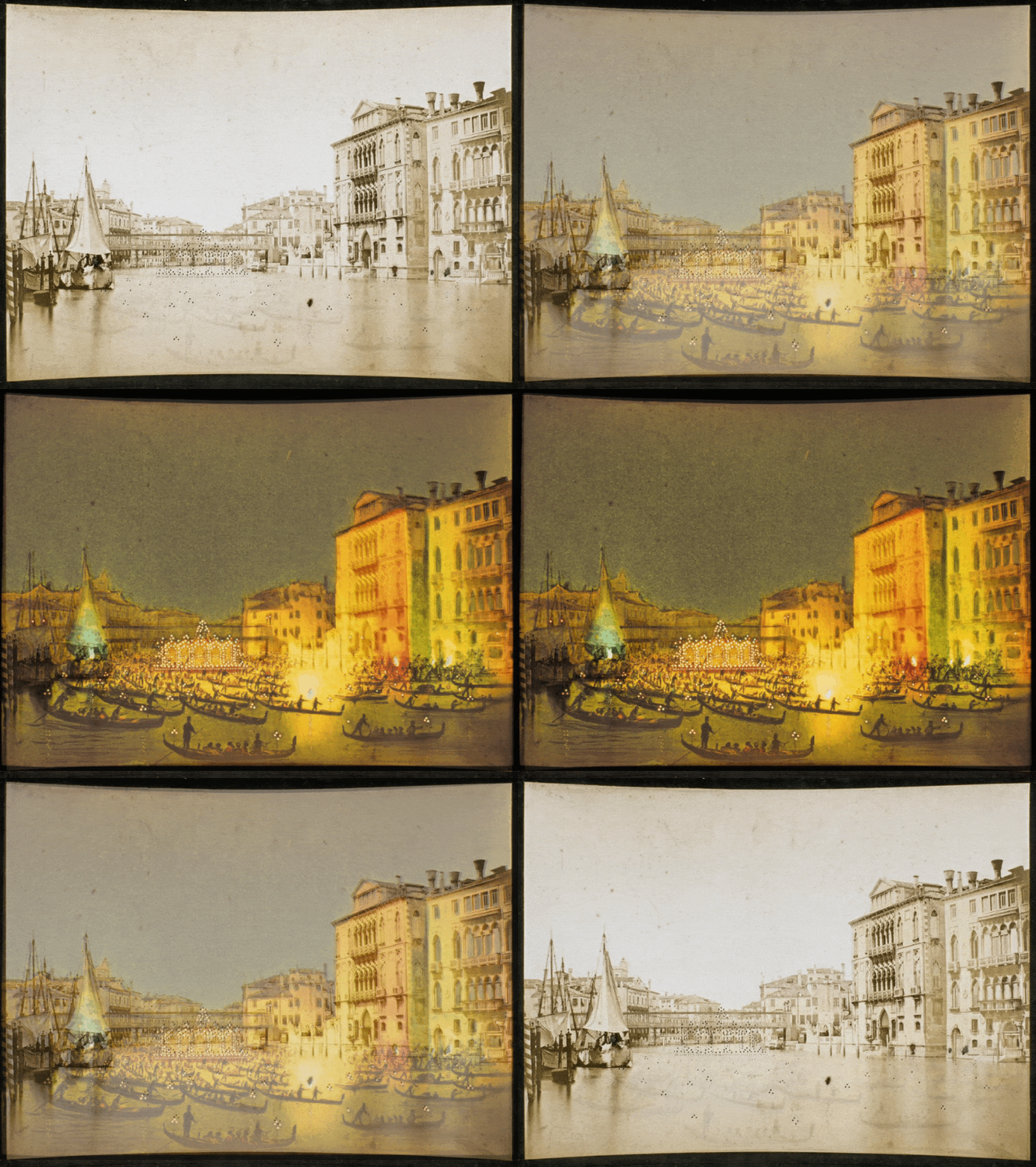 |
Figure MCS-1.2 – Photographic Paper Diorama |
| Carlo Ponti, ca. 1870. Venise, quai des Esclavons et place Saint-Marc. Cinématèque française, layered paper on a softwood frame, 30.2 x 43 cm. Gif animation © Rod Bantjes. |
 |
Figure 69120.3 – Dissolving View |
| When the front flap is completely closed the image of Eglise de Nicholai is extinguished and replaced by Statue de Pierre le Grande.[2] Layered paper on a tin frame, 8.2 cm in diameter.
Gif image © Rod Bantjes. |
A paper diorama is a translucent, multi-layered image that can be transformed by back-illumination. In the 1850s it was popularized by the French toy maker Henri Lefort (1804-1880) but it has a lineage that traces back to the pierced vue d'optique of the 18th century.
The views are composed of layers of translucent paper. The front layer is a coloured lithograph or photograph on thin paper. It can be pierced to simulate points of bright light.
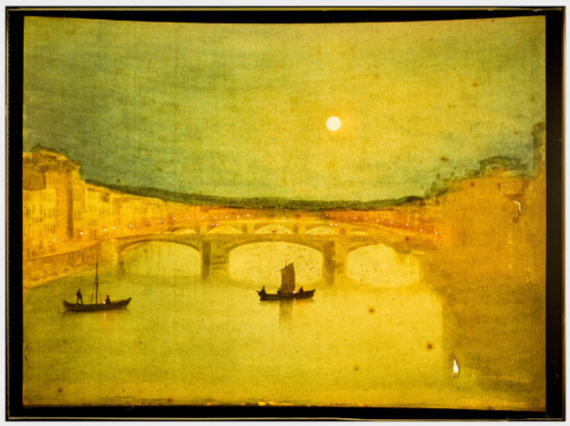
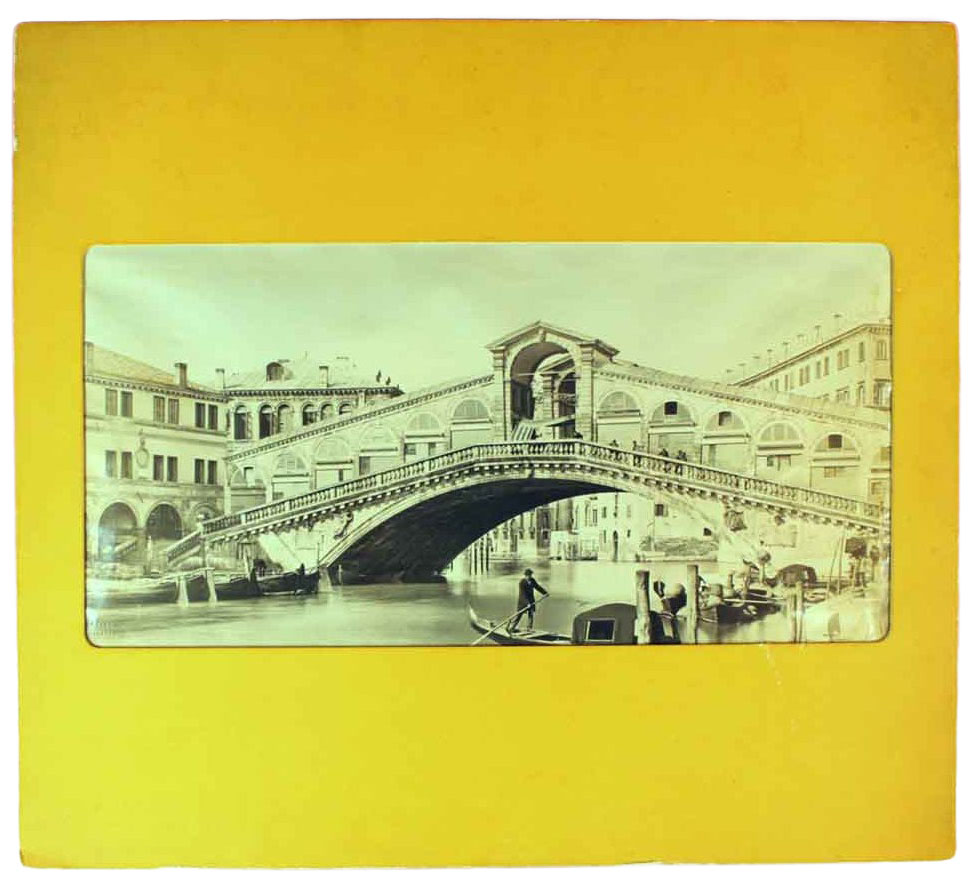
Hidden Layer: A hidden layer can contain enhancements of the first layer – like the gondolas that appear in the canal in Carlo Ponti's view of Venice (Figure MCS-1.2). This hidden layer too can be pierced or scratched thin to increase points of illumination.
Back Layer: The back layer is a thin tissue that can be shaded to enhance light-dark contrasts. Colour, for instance the red light of fire, can be applied here either by painting or by gluing scraps of coloured tissue over piercings in the overlayers. All the layers are stretched across a light wooden frame with a tab of some kind that one could grip when pulling it out of its slot in the viewer.
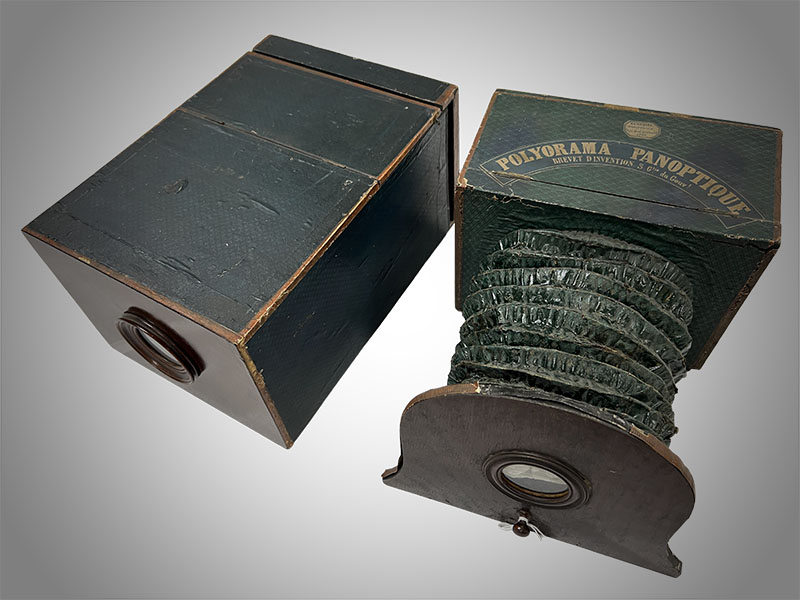
Lighting Mechanism: To enjoy these transformations fully one should have a specially-designed "optical machine" with means to control illumination from the front and back of the view such as a Polyorama Panoptique. Variable illumination is usually accomplished by flaps with reflective surfaces that can reflect light into the box.
Mood and Atmosphere: The paper diorama made images more vibrant by giving them an internal light source and more "lifelike" by enabling the scene to evolve through time. The main uses of this effect were transitions from evening to night. Romantic painters like Caspar David Friedrich (1774 - 1840) loved the moody atmospheric effects that could be produced in this way. He, along with Thomas Gainsborough (1727-1788) and others used glass transparencies for these effects. There is also an 18th-century optical machine known as a Perspectiefkast that uses glass transparencies but for a more spatial rather than temporal effect.
Surprise Elements: Some paper dioramas have painted figures in the underlayer that emerge into the scene as the illumination shifts (e.g. the gondolas in Figure MCS-1.2). This was a 19th-century innovation from as early as 1838. The Bill Douglas Museum has an example of a 'dioramic view' (catalogue #70212) of the coronation of Queen Victoria published in 1838. The young Queen and crowds of people, absent at first, fill Westminster Abbey when the image is back-illuminated.
Dissolving Views: Some paper dioramas have as an underlayer a second coloured lithograph of an entirely different scene. In one example an image of the Eglise de Nicholai dissolves into an image of a statue of Pierre le Grande rearing up on his horse (figure 69120.3). To achieve this effect the user must open the back flap and completely shut the front one to extinguish the first image. 'Dissolving views' of this kind can be dated to as early as 1840 with Spooner’s 'Protean View' No. 28 which transitions, when back-illuminated, from an image of the Thames Tunnel to one of the Coronation Procession (Brunel Museum, #LDBRU:2008.02(a)).
Paper Diorama Formats:
Plaques Dioramique
A plaque dioramique[1] is a paper diorama with a rectangular wooden frame. As with the vue d'optique, the standard format sizes of paper dioramas define the sizes of possible optical machines.
There is a family of boîtes dioramique all of which are designed to accept standard-format plaques dioramique.
| Plaque | H x W (cm) | Device |
Source: Cinématèque française |
26x33 |
|
Source: Cinématèque française |
22x28 |
Polyorama 28 |
Source: Cinématèque française |
19x24 |
|
Source: Cinématèque française |
14.5x20 |
 |
Source: Cinématèque française |
10x14.5 |
 |
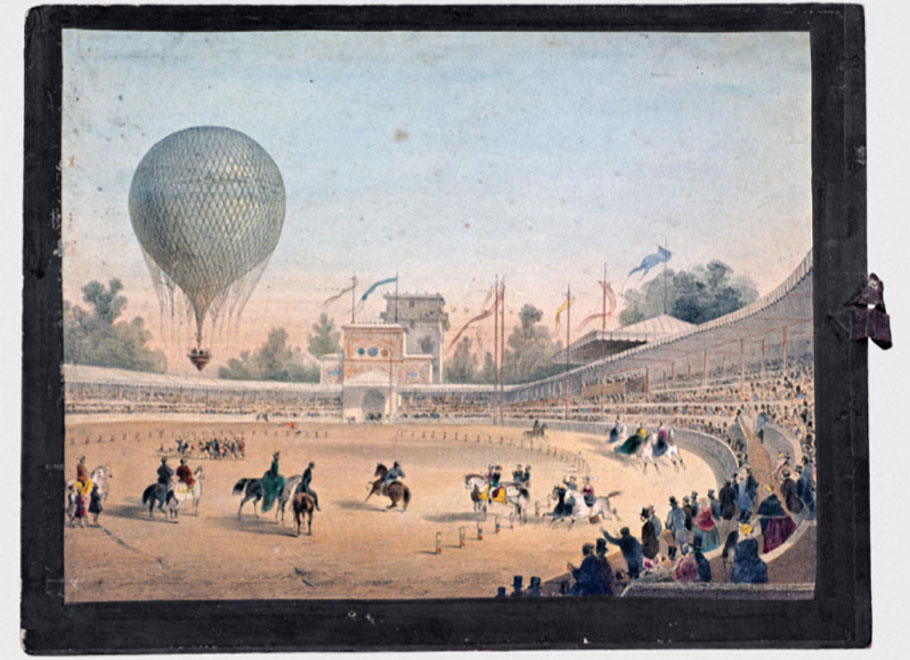
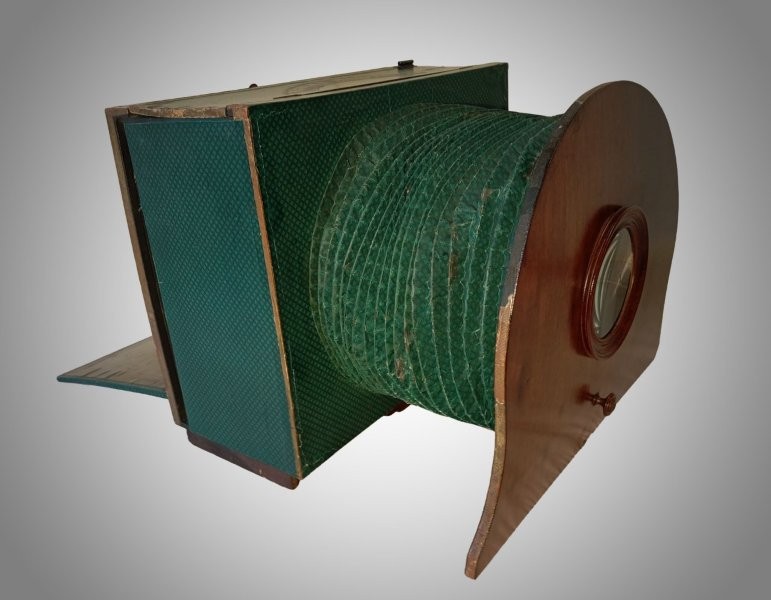
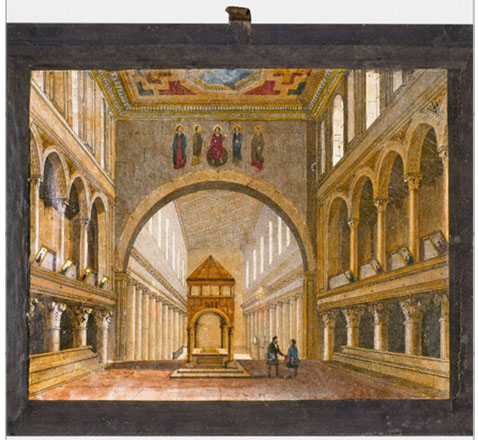
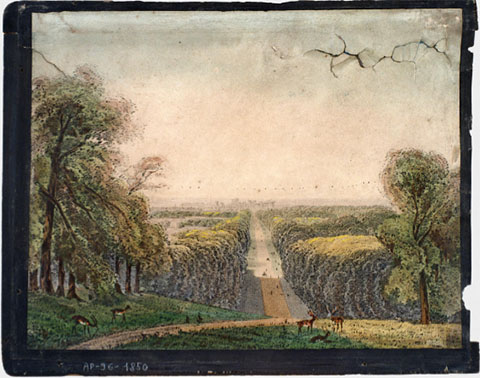
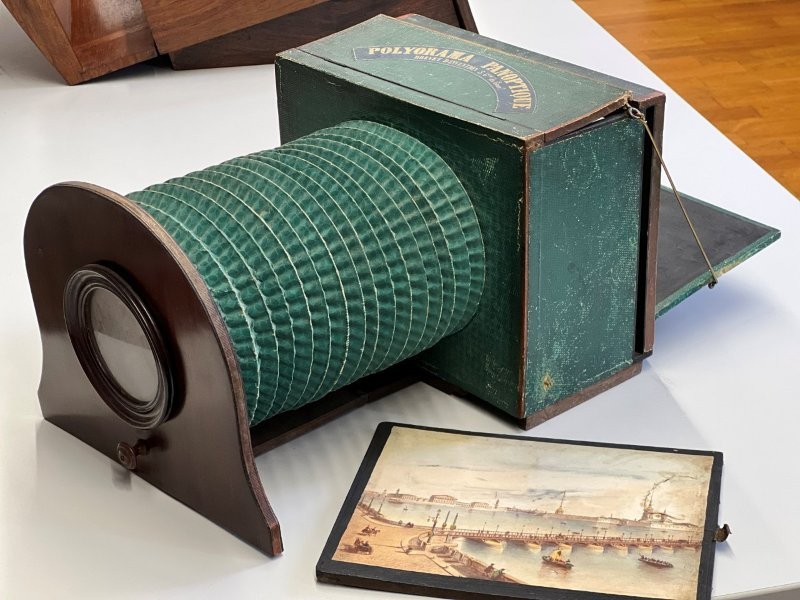
Lefort made 5 standard sizes for his boxes (rather than three – small, medium and large – as many on the Internet believe).[2] I use the width of the plaque dioramique to define the sizes of the boxes. So, for example, a polyorama panoptique that takes 26 x 33 cm paper diorama is a "Polyorama 33."
The images in this table are reproduced in sizes more-or-less proportional to the originals so as to give an idea of how they would compare placed side-by-side.
Circular Polyorama
Henri Lefort made two sizes of circular paper dioramas. The 9.5 cm one is for the Boîte Lorgnette which I suspect was one of his earliest boxes (prior to 1849). The 8.3 cm version is for the small and delicate Lorgnette Pittoresque.
| Plaque | Diameter (cm) | Device |
Source: Cinématèque française |
9.5 |
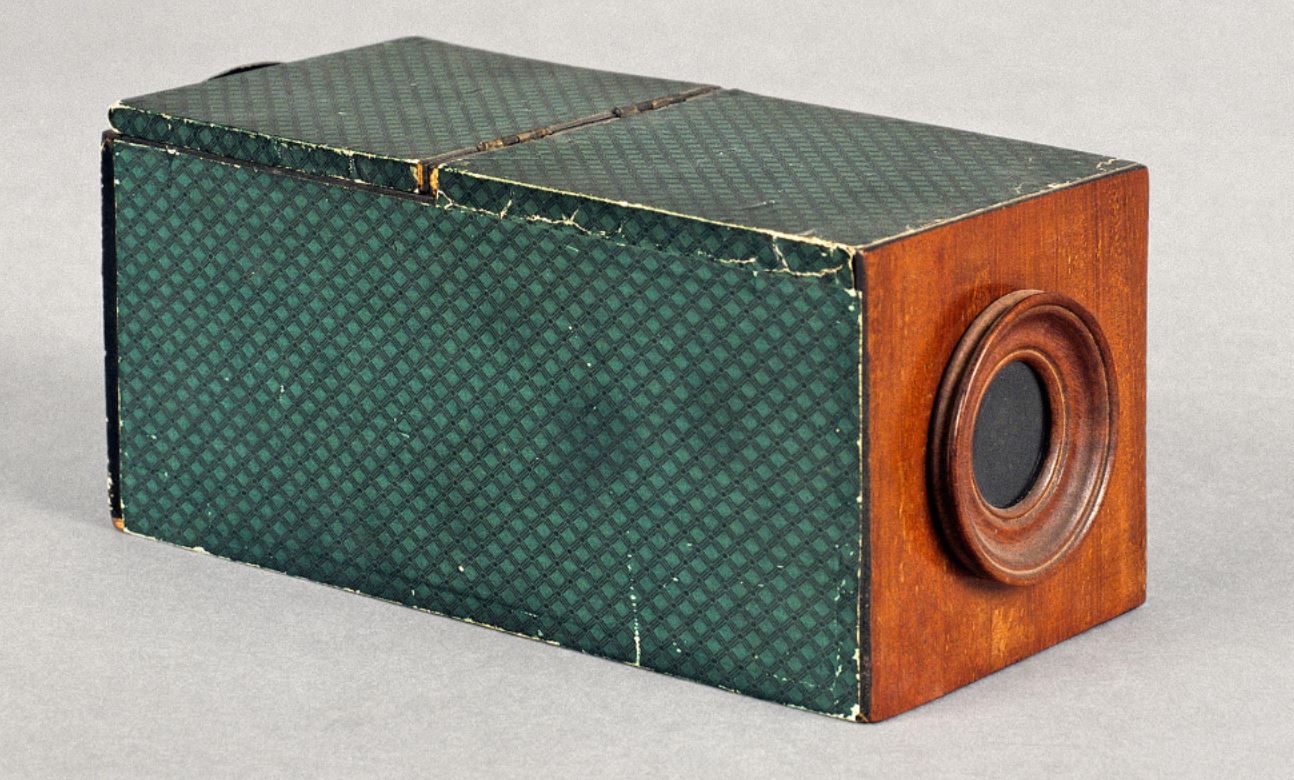 |
|
8.2 |
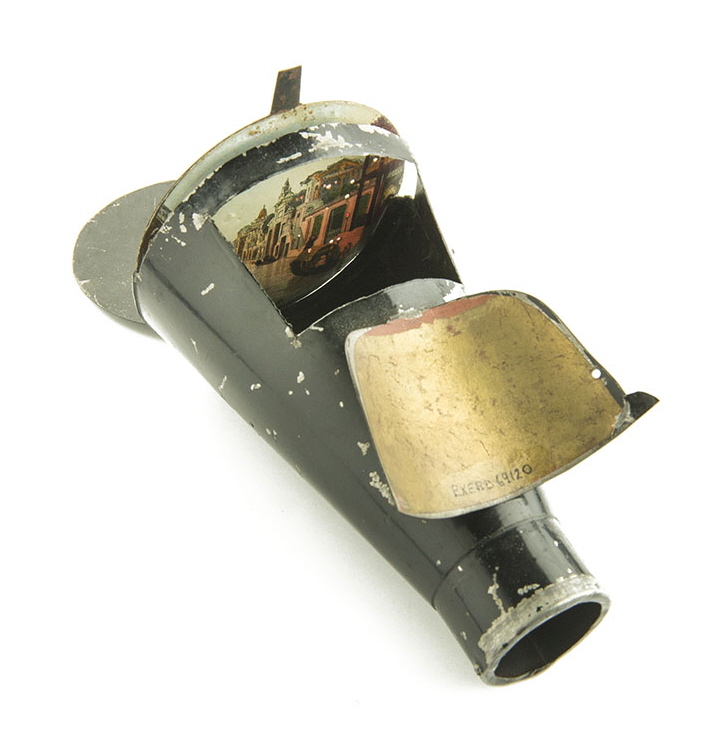 |
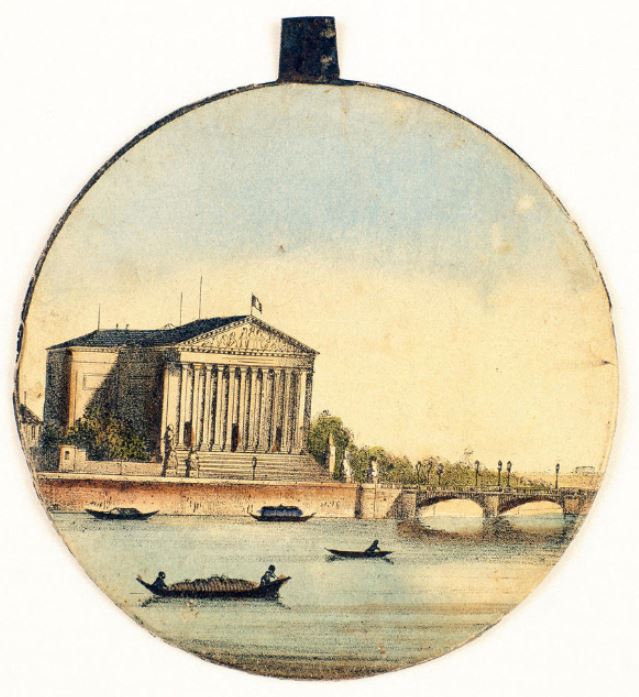
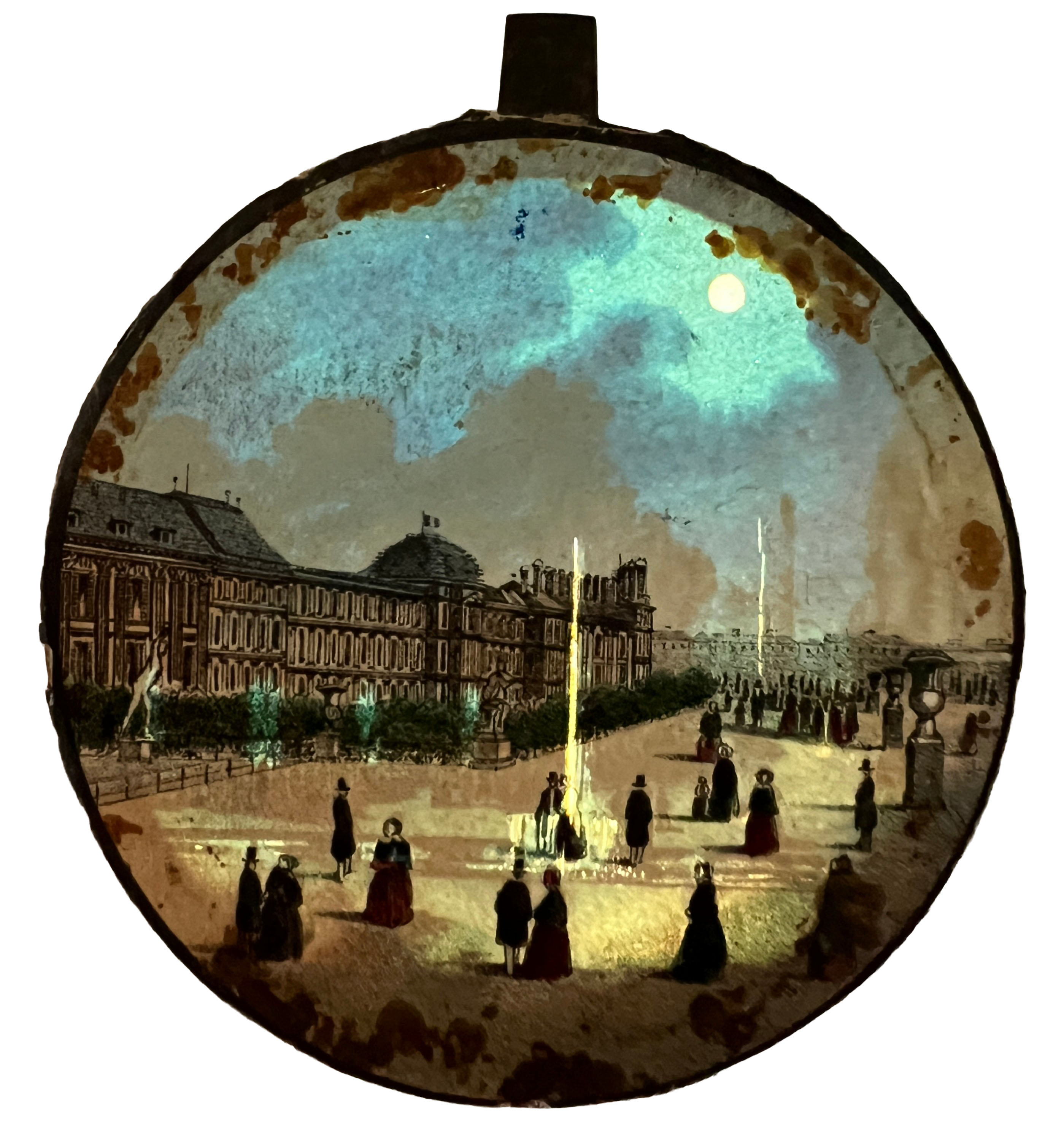
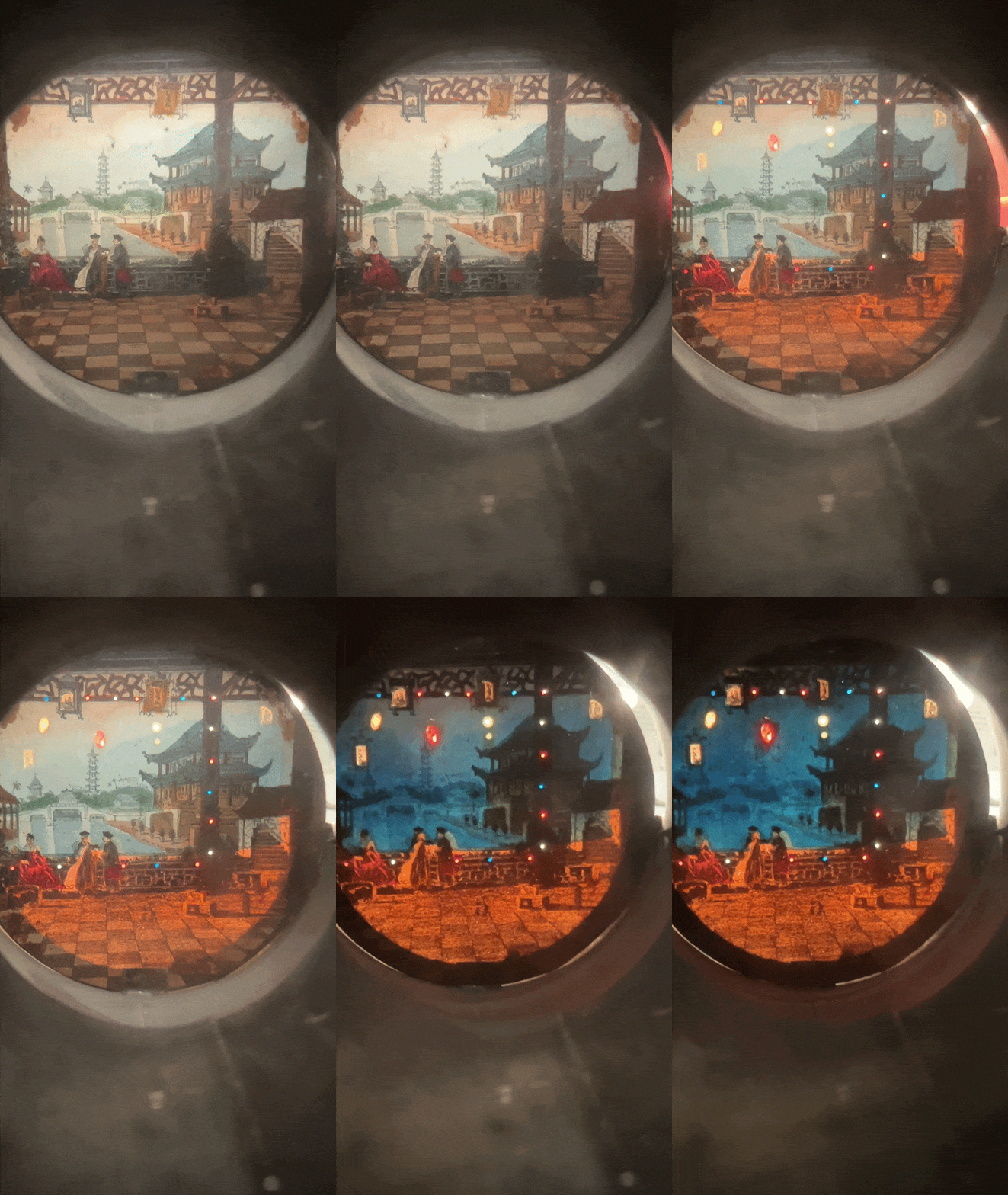 |
Figure 69120.4 – Day-Night View |
| Gif image © Rod Bantjes. |
The paper layers are glued to a circular tin frame with a tab to facilitate insertion and removal from the device. These were sold in little paper packets containing "series" of six views each.
Figure 69120.4 is a day to night transformation as seen through the lens of a Lorgnette Pittoresque. The devices is directed toward a light-source and the back-flap is gradually opened. Then the top-flap is gradually closed to give the full effect of back-illumination.
Alethoscope Formats
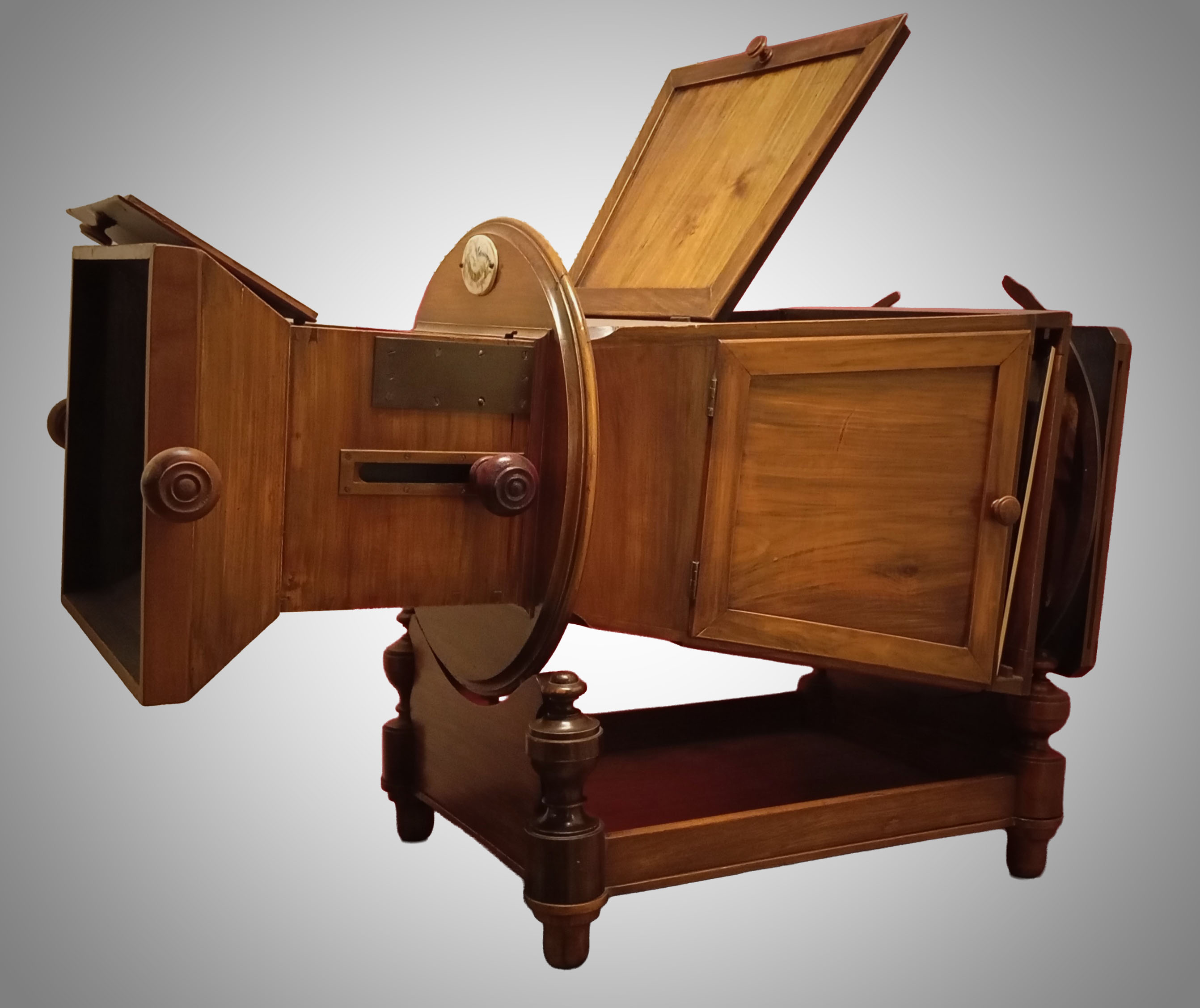
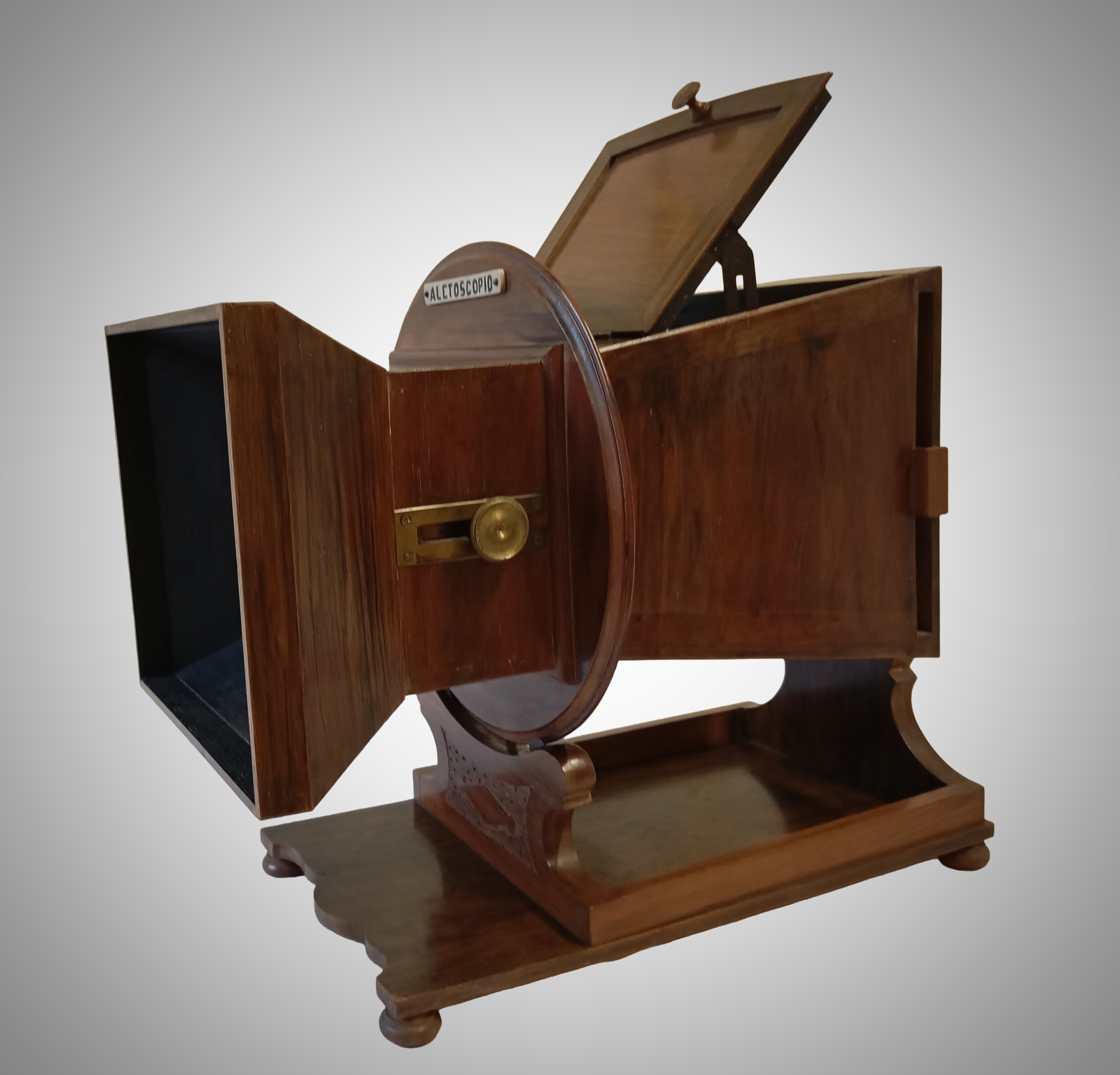
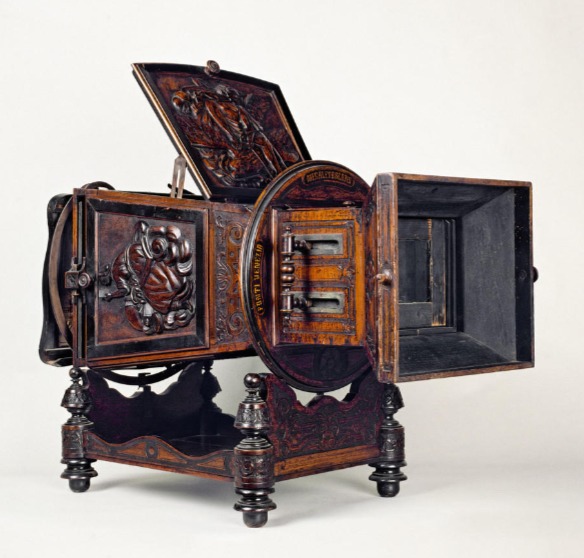
In the 1860s, Carlo Ponti (ca.1823 - 1893) and Henri Lefort began making paper dioramas using albumen photographic prints as the first layer. Lefort's were for the stereoscope and Ponti's were for his elaborate version of the optical machine that he called an Alethoscope, then, after some minor improvements, a Megalethoscope.
It is as though the two artists felt that photographic realism was deficient and needed deeper layers of time and imagination to bring out the truth of experience.
Curators at the Swiss Camera Museum describe the layered structure of these images as follows. They omit that some of the frames were curved away from the viewer for reasons I discuss here.
| "Each plate consists of six layers, fixed on either side of the fir frame. The front structure consists of an albumen print, mounted on an intermediate support of linen canvas. Beneath these first two layers is attached a watercolor paper representing, through drawing, the image enhanced with vibrant colors. Albumen papers often have numerous perforations made with a needle. These holes also pass through the two lower layers, namely the linen canvas and the watercolor paper, and serve to represent, in the nighttime presentation, candles, stars, streetlights, or even lava on the slopes of a volcano. The back structure consists of blue tissue paper, locally perforated in places and glued to a white paper support. A linen canvas is finally fixed to the back to protect the lower structure from any abrasion or shock."[3] |
| Plaque | H x W (cm) | Device |
|
30x43 |
 |
|
16x20? |
 |

Stereoscopic "Tissue Views"
David Brewster designed the first lenticular stereoscope (1849) with a ground-glass back for back-illumination of transparencies. He was doubtless inspired by optical machines for pierced vues d'optique. It is also possible that he saw pre-1849 versions of Henri Lefort's boxes for paper dioramas.
| Plaque | H x W (cm) | Device |
|
8.5x17.6 |
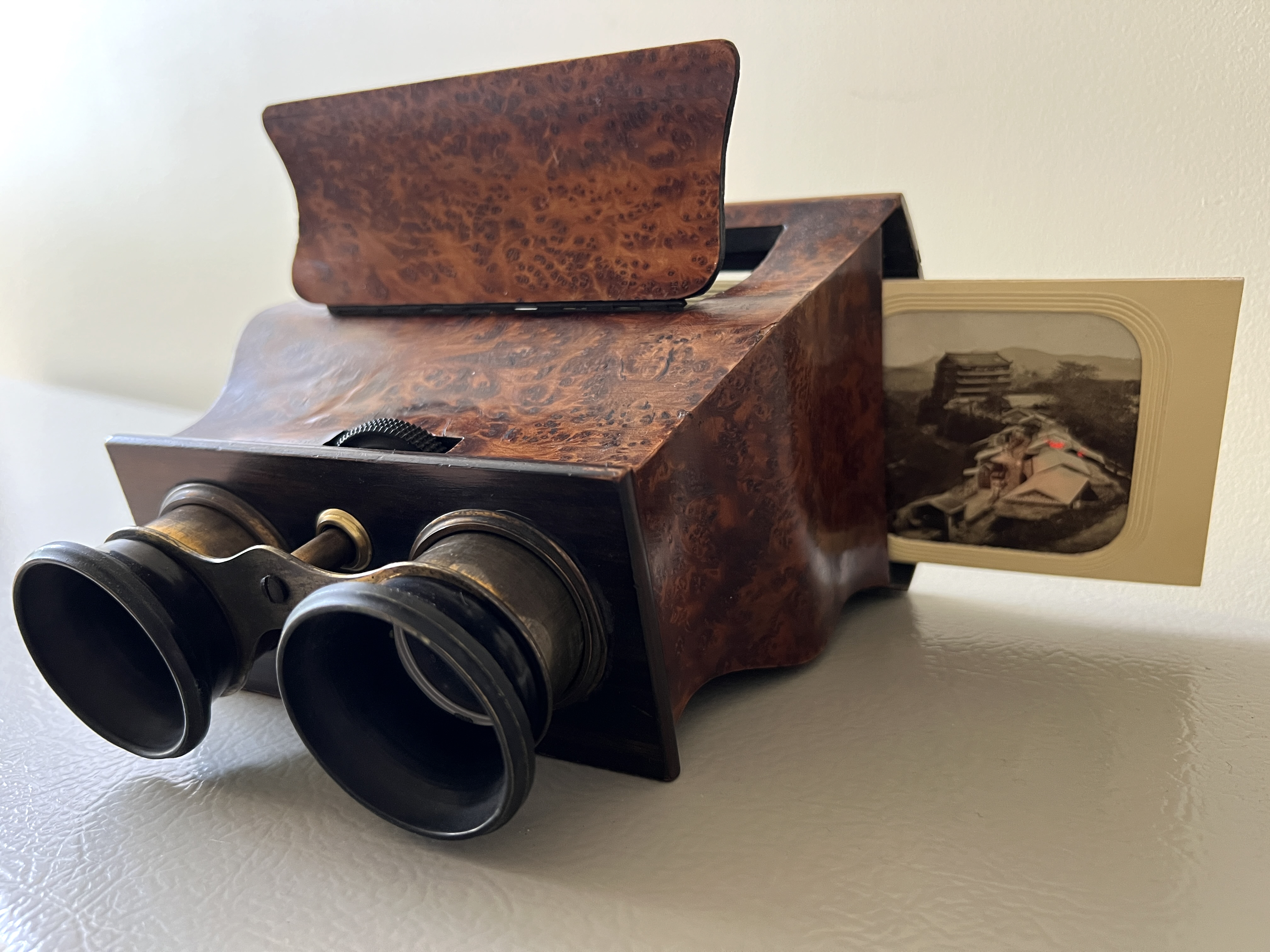 |
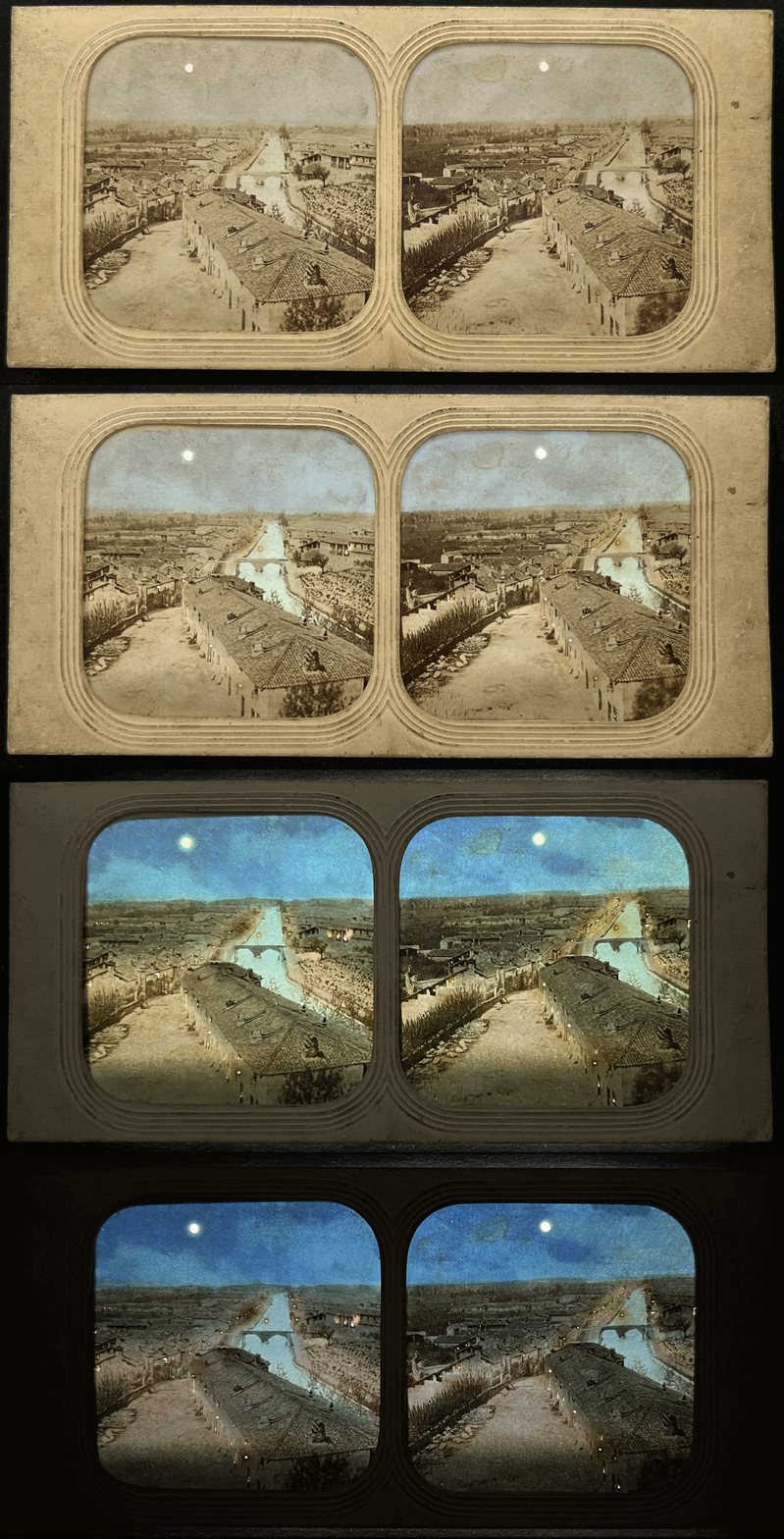
It is interesting that the individual views in a stereoscopic image are more-or-less the same size as Lefort's circular paper dioramas. We have no answer to the question of why Brewster chose this diminished size for the standard stereogram.[4] Charles Wheatstone's original stereoscopic images were closer to vue d'optique size. It is conceivable that Brewster was inspired by early Lefort boxes and their miniature paper dioramas.
Lefort was probably the first to apply his techniques for paper dioramas to the stereogram format. In these he used photographic images exclusively as the first layer. Modern collectors now call this format of paper dioramas "tissue views", although when that term came into use is uncertain. Many 19th-century makers took up the idea of the tissue view, and tens of thousands were produced in the 1860s, mainly in France.
Photoscopic Views
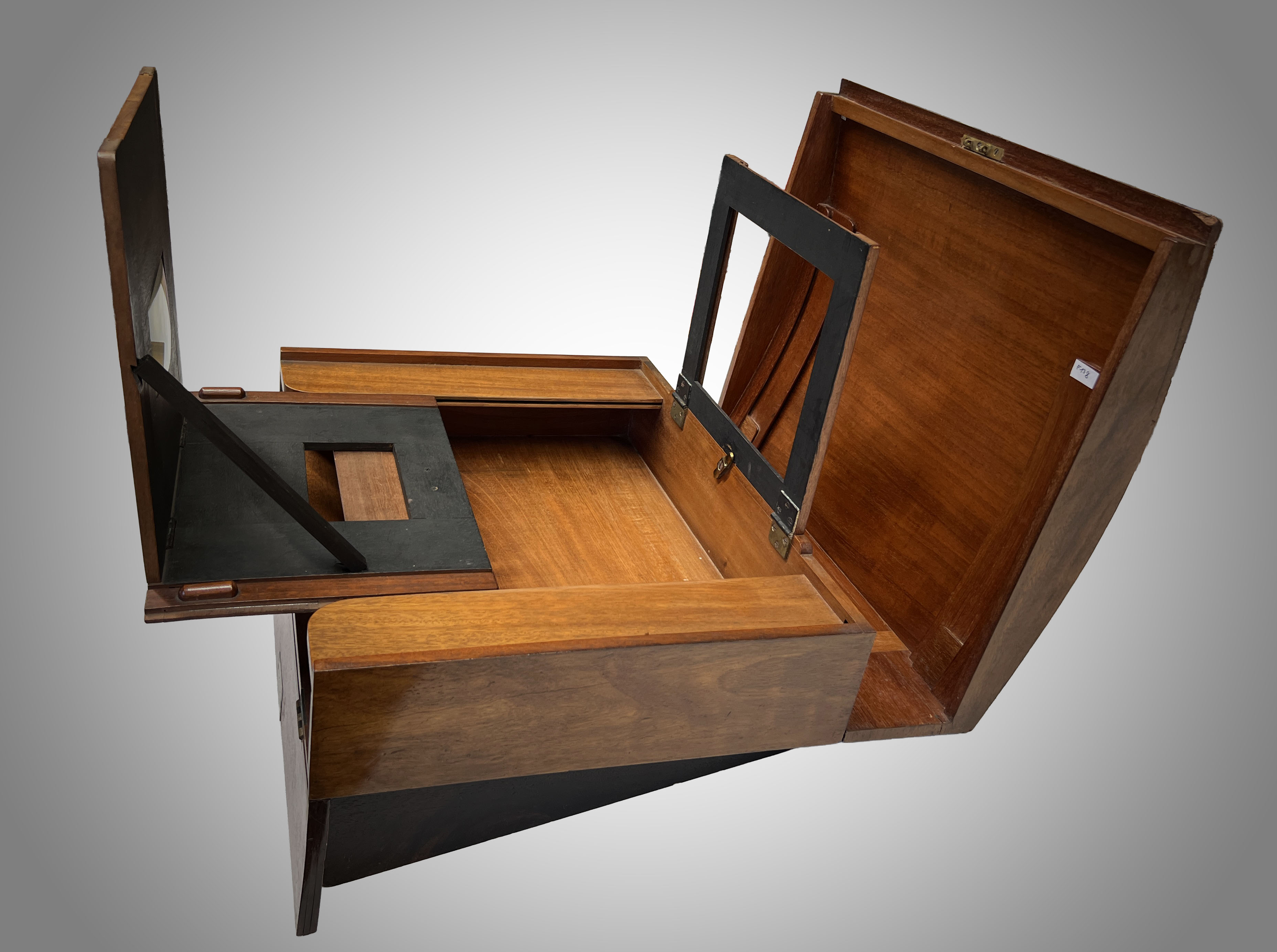
These are late-19th-century paper dioramas in stereoscopic tissue-view format. Like tissue-views, the paper layers are inset within a wide cardboard frame unlike Lefort plaques dioramique that are stretched over a light wooden frame invisible from the front.
| Card | H x W (cm) | Device |
Photoscopic 28 |
25.5x28 |
|
Photoscopic 26 |
25.5x25.5 |
 |
Photoscopic 19 |
19x19 |
|
Photoscopic 17 |
13.5x17 |
 |
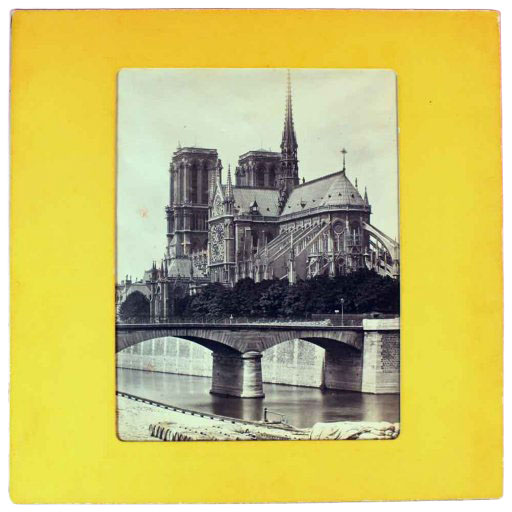
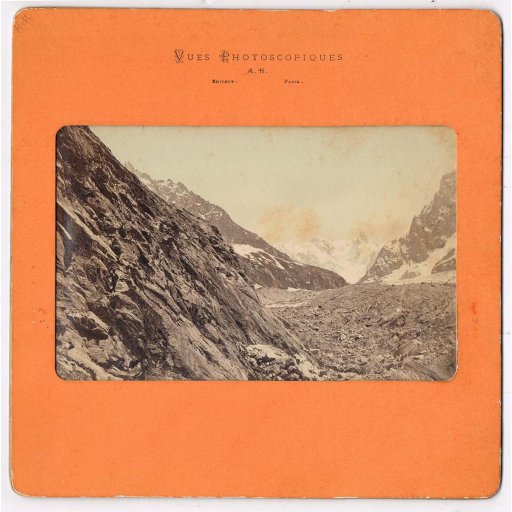
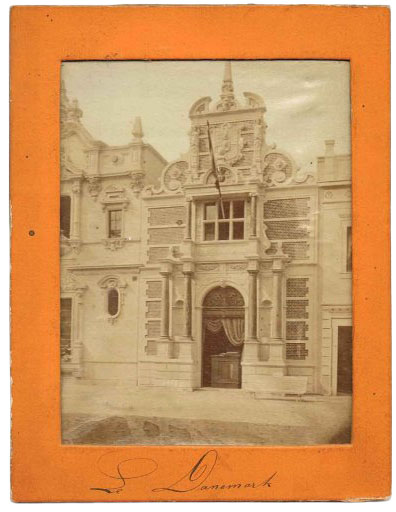
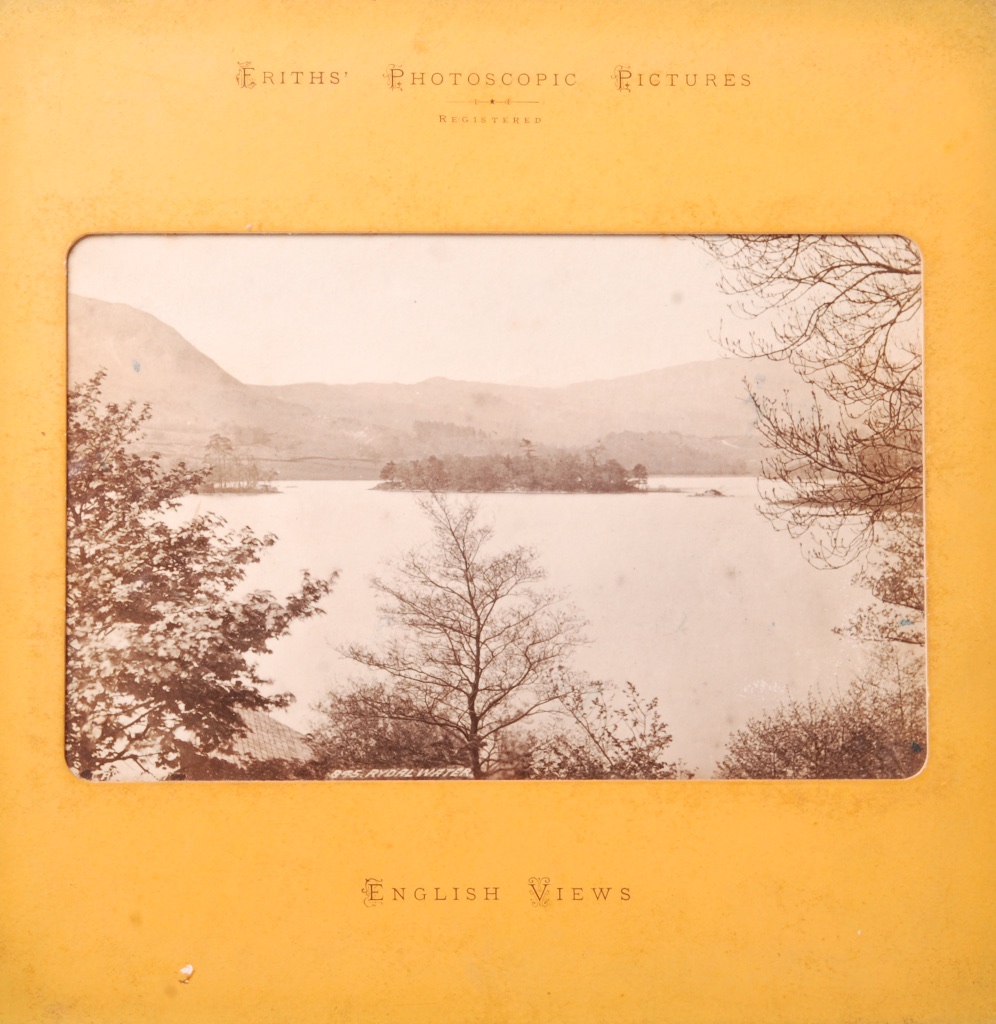 |
Figure PD.1 – Frith View |
| Photo © Antiq Photo. |
These images are all from the François Binétruy collection where they are not associated with viewing devices. M. Binétruy indicates that they are similar in form to plates for the polyorama panoptique; however, we can see by comparison that none of the dimensional formats are the same. So they would not fit properly in Polyorama Panoptique boxes.
What devices were these images meant for?
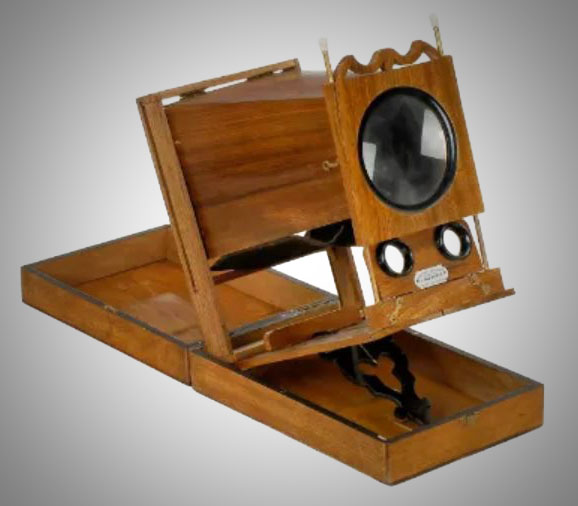
The Photoscopic 19 images are labelled "Vues Photoscopique, A.H. Éditeur, Paris" in the same script and on the same colour cardboard as was used by Alfred Hautecoeur (1824 - 1882) on his stereoscopic tissue views. The Hautecoeur workshop also produced Stereo-Graphoscopes, an example of which I have depicted here. Paper dioramas work better in enclosed boxes, but could nonetheless work in a graphoscope with strong back-illumination.
English photographer Francis Frith (1822-1898) made 19 x 19 cm-format paper dioramas he called "Photoscopic Pictures" for his Cosmoscope viewer (Figure PD.1).[6] Or, at least they appear with a Cosmoscope advertised by Antiq Photo, Paris ca. 2024. The upright black frame visible in the photo reproduced here could hold a 19 x 19 cm Vue Photoscopique and offer some back-illumination particularly if the device were fitted with its hood (see Figures GT49.1 and GT49.2). The frame-colour, lettering font and form of the "Photoscopic Pictures" are nearly identical to Hautecoeur's Vues Photoscopique. Given that Hautecoeur died in 1882 and the Cosmoscope was invented ca. 1880, it is probable that the "Photoscopic Pictures" were modelled after the Vues Photoscopique and that the Cosmoscope was meant as a viewer for them.
Like the Cosmoscope, the Naya Alethoscope and the Megalethoscope were designed to accept multiple image-formats. The Alethoscopes were also enclosed and better designed for back-illumination than the Cosmoscope. The Naya back-plate (36 cm) is too large for the Photoscopic 28 format. The Naya device has three other formats that would need to be measured to say for sure what they fit. Ponti's Megalethoscope does however have a variable image-plate which surely would fit some Photoscopic formats.
History of the Paper Diorama
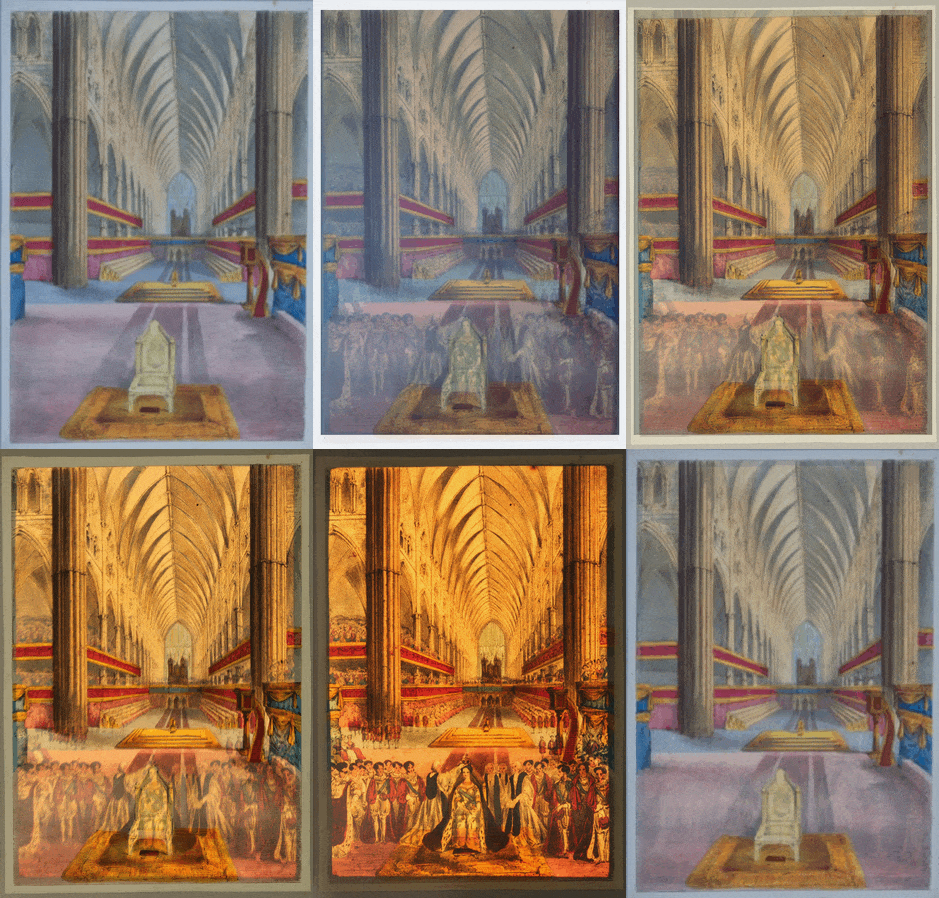 |
Figure 70212.1 – Dioramic View |
Queen Victoria's Coronation, 1838. This paper diorama, like later "protean views," appear to have been designed without an accompanying viewing-box. Instead, it was likely held up against a window for back-illumination. Source: Bill Douglas Cinema Museum . Gif animation © Rod Bantjes. |
Diorama: Without some historical background, the term "diorama" can be misleading. Now people use it to mean any illusionistic display that includes a painted backdrop depicting a space with three-dimensional models placed as though in the foreground of that space. However, the term was first used in 1821 by Louis Daguerre (1787-1851), and Charles Bouton (1781-1853) for their immersive image and light shows in Paris and London (1823). The Daguerre and Boulton diorama was a small theatre in which the audience sat on a platform that rotated between two stages, each with a different romantic vista.
Eidophusikon: People were enthralled by the Diorama, just as an earlier generation had been by set-designer Philippe de Loutherbourg's Eidophusikon (1781). De Loutherbourg used translucent fabric stage elements that were front- and back-illuminated with coloured lights. These were sophisticated improvements on stage coulisses that had back-illuminated cutouts with coloured paper or cloth filters for lighting effects – often the same sorts of day-night effects that pierced vues d'optique had used since the mid-18th century.
Painting on Glass: The transparent image, infused with light, appealed to Romantic painters such as Jacob Philipp Hackert (1737 - 1807), Caspar David Friedrich (1774 - 1840) and Ernst Ferdinand Oehme (1797 - 1855).[7] Many in the early 19th century experimented with illuminated glass transparencies, seeking to represent awe-inspiring scenes of nature with dramatic contrasts of light and dark and transitions of mood. Thomas Gainsborough (1727-1788) had earlier sought to replicate the effects of the Eidophusikon using glass transparencies in a specially-designed Show-box. Thomas Jervais had preceded Gainsborough with works on glass in the 1770s as well as stained-glass windows in which he used layered colour transparency and depth very like Lefort was later to do in his paper dioramas. Also, of course, stained glass, viewed from the dark interiors of churches and changing with the passing moods of daylight, had for centuries created pictorial effects that all Europeans would have been familiar with. The church or cathedral can be thought of as the original viewing-box from which theatres and optical machine are descendent.
The Amateur Tradition - Hooper: Genteel amateurs had been making transparencies for decades before Lefort's commercial efforts, circa 1849. William Hooper, in 1774 had given instructions for people on how to pierce and back-illuminate their vues d'optique. He also gives ideas both for layering and varying densities of opacity/transparency – for example, adding a backing-layer of saffron-coloured paper with the colour more densely applied behind areas that are meant to appear further in the distance.[8] Borrowing from scenography, he recommends gluing image-elements on to separate frames that can be moved in relation to one another. By this means users would be creating animations within the scene – for example, the setting of the sun.
The Amateur Tradition - Orme: Edward Orme (1775-1848) in 1807 offered a how-to guide for making layered, paper transparencies that came to life though back-illumination. He had discovered that treating painted paper with varnish increased the brilliance and translucency of colour. He recommends varnish for bright highlights and then varying densities of paint on the front and back surfaces of the paper for further gradations in light and shadow.[9] The latter was certainly one of Lefort's techniques. Orme also reveals that many amateurs enjoyed painting on glass. These amateur traditions[10] were surely among the numerous threads of inspiration for the scaled-up exhibitions of the Eidophusikon and Diorama.
Daguerre and Boulton’s Diorama: Daguerre and Boulton’s Diorama inspired in a different way than the Eidophusikon had, not so much because of differences in the illusion or its techniques but because of a wider circle of demand and ability to pay for such delights that the Industrial Revolution was making possible. There was an increasing demand for miniature, private versions of optical amusements for home use. Lefort's polyorama was one of many commercial efforts to bring the effects of the Diorama into the homes of upper and middle-class patrons.
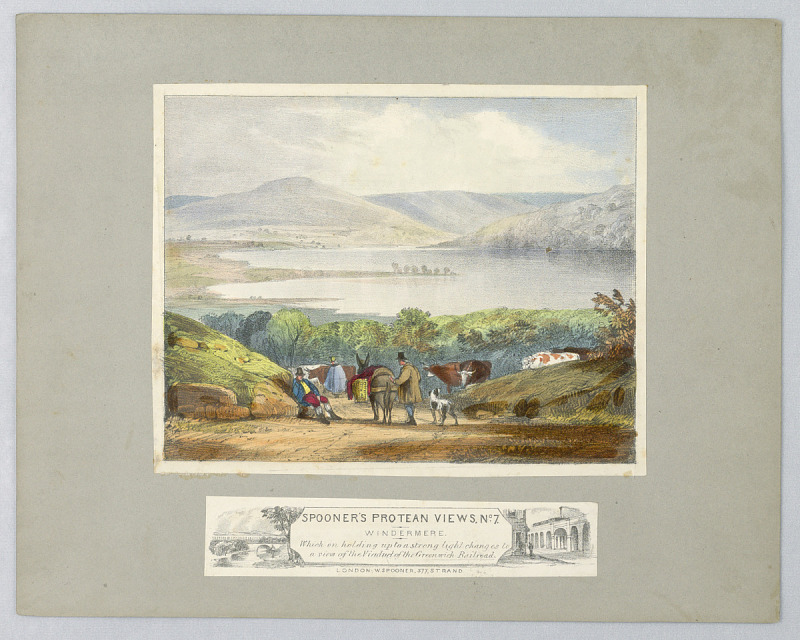 |
Figure PD.2 – Spooner's Protean View No. 7 Windermere |
| Source: The Smithsonian, Gift of Hamill and Barker. |
Early "Dioramic" Views: An early example from 1838 of a portable "dioramic view" depicts the coronation of Queen Victoria (Figure 70212.1). The young Queen and crowds of people, absent at first, fill Westminster Abbey when the layered image is back-illuminated. In the Daguerre and Boulton Diorama one scene is replaced by an entirely different one representing a different location. Here, by contrast, the scene remains the same while hidden figures are added to it. Stereoscopic versions of this sort of effect are referred to by modern collectors as "surprise" tissue-views. "Surprise" is a more accurate designation for this effect than "dioramic".
Dissolving Views: William Spooner (active 1830 – 1854) began in the late 1830s to produce what he called "protean views." These were paper dioramas in which back-illumination revealed an entirely new scene in another location. In one example a view of Lake Windermere is the scene on the front surface, but when the transparency is back-illuminated, the scene changes to "the Viaduct of the Greenwich Railroad" (Figure PD.1). This spatial transformation of scene is what the Daguerre and Boulton Diorama achieved with its rotating stage. In its paper form this sort of transition is most precisely described as a "dissolving view." This term was also used for transitions between two views projected onto a screen by two magic lanterns – as the image in one lantern was darkened, the image in the second lantern would be brightened to replace it. While the magic lanterns is a much older device, many innovations in magic lantern shows took place in the 19th century and it is uncertain whether the magic lantern dissolve preceded the paper-diorama version or vice-versa.
Diorama vs Polyorama: Likely the two spatially separate stage scenes were what Daguerre and Boulton had in mind when they invented the term "diorama." By replacing "di" meaning two with "poly" or many, Lefort meant to indicate that his polyorama could effect multiple major transformations. A single layered transparency (a diorama) could do two, but the box or polyorama allowed for many "set changes" where one transparency could be slid out and another inserted. Both terms referred to viewing apparatuses plus associated images. For the polyorama panotique images we hope to limit the ambiguity of the term "diorama" by specifying "paper diorama" as we have defined it at the start of this document: "a translucent, multi-layered image that can be transformed by back-illumination."
Conclusion: Henri Lefort did not invent the paper diorama. Nor did he invent the idea of a viewing-box for it that controlled front and back illumination – that had long been a standard feature of Raree Shows and Mondo Niovos. One might argue that he invented a mechanism for synchronizing the lighting change by connecting front and back flaps with a wire. However, his most consequential innovation was probably in manufacture and marketing. He mass-produced boxes as small as a child's toy, lightweight and cheap enough for a wide range of clientele to afford them. They were personal, hand-held devices with which users could participate in the making of very charming lighting effects. His standardized image-formats became hugely popular and a whole constellation of new optical machines was created around them.
Endnotes:
[1] I use this term for paper dioramas with wooden frames. I like the connotation of the English word "plaque" that captures the hard, three-dimensional physicality of the paper diorama on its stiff wooden frame.
[2] My evidence for this conclusion is the measured sizes in the Cinématèque française collection. By this means I discovered that there must be a box that accepts a 28 cm plaque even though I have not yet seen one.
[3] Carlo Ponti, a magician of the image, exhibition at the Swiss Camera Museum, Vevey, Swiss Camera Museum, 1997, pp. 9-26.
[4] I distinguish between the stereogram, the physical card with two images on it, and the stereoview, the 3D scene that one experiences when looking at a properly stereoscopic stereogram in the stereoscope.
[5] Paul wing confirms that this "7 1/2" square" format was used with the depicted Hautencoeur viewer. (Wing, Paul, Stereoscopes : The First One Hundred Years (Nashua, N.H.: Transition, 1996) 143).
[6] Catalogue entries for the collection of the Houghton Library, Harvard College Library confirm that they were paper dioramas. The dimensions come from examples sold by Flints Auctions, ca. 2022.
[7] Füsslin, Georg, Der Guckkasten : Einblick, Durchblick, Ausblick (Stuttgart: Füsslin, 1995), 74.
[8] Hooper, William, Rational Recreations in Which the Principles of Numbers and Natural Philosophy Are Clearly and Copiously Elucidated, 4 vols. (London,: L. Davis etc., 1774).
[9] Orme, Edward, An Essay on Transparent Prints, and on Transparencies in General. (London: Edward Orme, 1807), 45.
[10] Few of these amateur works have survived, although there is one, along with a home-made viewing box, "The Crypt" in the Bill Douglas Cinema Museum.